
Before she skipped down the Yellow Brick Road, before she belted “Over the Rainbow,” and long before she became one of Hollywood’s most iconic stars, Judy Garland was just a wide-eyed little girl named Frances Ethel Gumm, spending sweltering Southern summers in Murfreesboro, Tennessee.
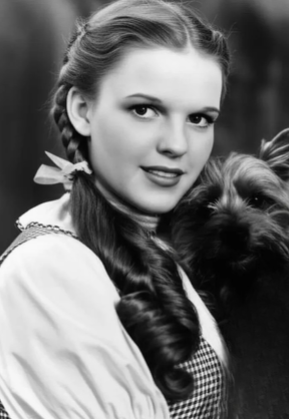
Nestled in the heart of Rutherford County, Murfreesboro might seem an unlikely launchpad for a future legend. But for young “Baby Gumm,” the town’s courthouse square, its peach-scented breezes, and the hum of family life on East Main Street and Manchester Pike shaped her early years in ways that linger like the refrain of a timeless song.
The Gumm Family’s Southern Anchor
Judy Garland’s connection to Murfreesboro traces back to her father, Frank Gumm. Born in 1886 in nearby Franklin, Tennessee, Frank was the son of William Henry Gumm and Nancy Melvina Dillard, a family deeply rooted in Middle Tennessee. By the 1920s, Frank and his wife, Ethel Marion Milne, were raising their three daughters—Mary Jane, Dorothy Virginia, and baby Frances—in Grand Rapids, Minnesota, where they ran a movie theater and performed in vaudeville acts. But the pull of family drew them back South often.
Murfreesboro, with its stately antebellum homes and oak-shaded streets, was more than a getaway—it was a touchstone. Frank’s relatives, including his sister Jessie Gumm Roberts, lived in a cozy house off Manchester Pike, a rural route lined with farms, and later in a home on East Main Street, just a stone’s throw from the bustling Public Square. For Frances, these visits meant trading Minnesota’s chilly summers for Tennessee’s firefly-lit evenings and the embrace of a sprawling Southern clan.
Life on East Main Street: Porch Swings and Piano Keys
The Gumms’ Murfreesboro home on East Main Street stood east of the downtown square, a short walk from the Rutherford County Courthouse, a grand neoclassical structure that dominated the town center. The house itself was likely a classic Southern cottage, its porch adorned with rocking chairs and climbing roses. Here, Frances soaked up the rhythms of small-town life.
Her grandmother, Nancy Gumm, was said to dote on her, while Aunt Jessie’s piano became an early stage. Family lore suggests that even as a toddler, Frances would clamber onto the bench, her tiny hands fumbling for chords as she mimicked her sisters’ rehearsals.
By age two, she was harmonizing with Mary Jane and Dorothy, their impromptu living room concerts drawing neighbors to the porch. “She had this voice,” locals would later recall, “like a bell—clear and impossible to ignore.”
The Courthouse Square: A Stage in Waiting
But it was Murfreesboro’s Public Square that truly ignited Frances’s spark. Anchored by the courthouse—a Civil War survivor, its walls still pocked by Union cannonballs—the square was the town’s beating heart.
Farmers hawked watermelons and tomatoes at the market, children chased each other around the Confederate monument, and on weekends, the bandstand hosted everything to political rallies. For Frances, the square was a magnet. She’d tag along with cousins to the Smith’s Drug Store soda fountain, where a nickel bought a cherry phosphate, or peer into the display windows of Miller’s Department Store. But it was the courthouse steps that called to her. Even then, she craved an audience. “She’d just start singing,” one elderly Murfreesboro resident claimed in a 1970s interview.
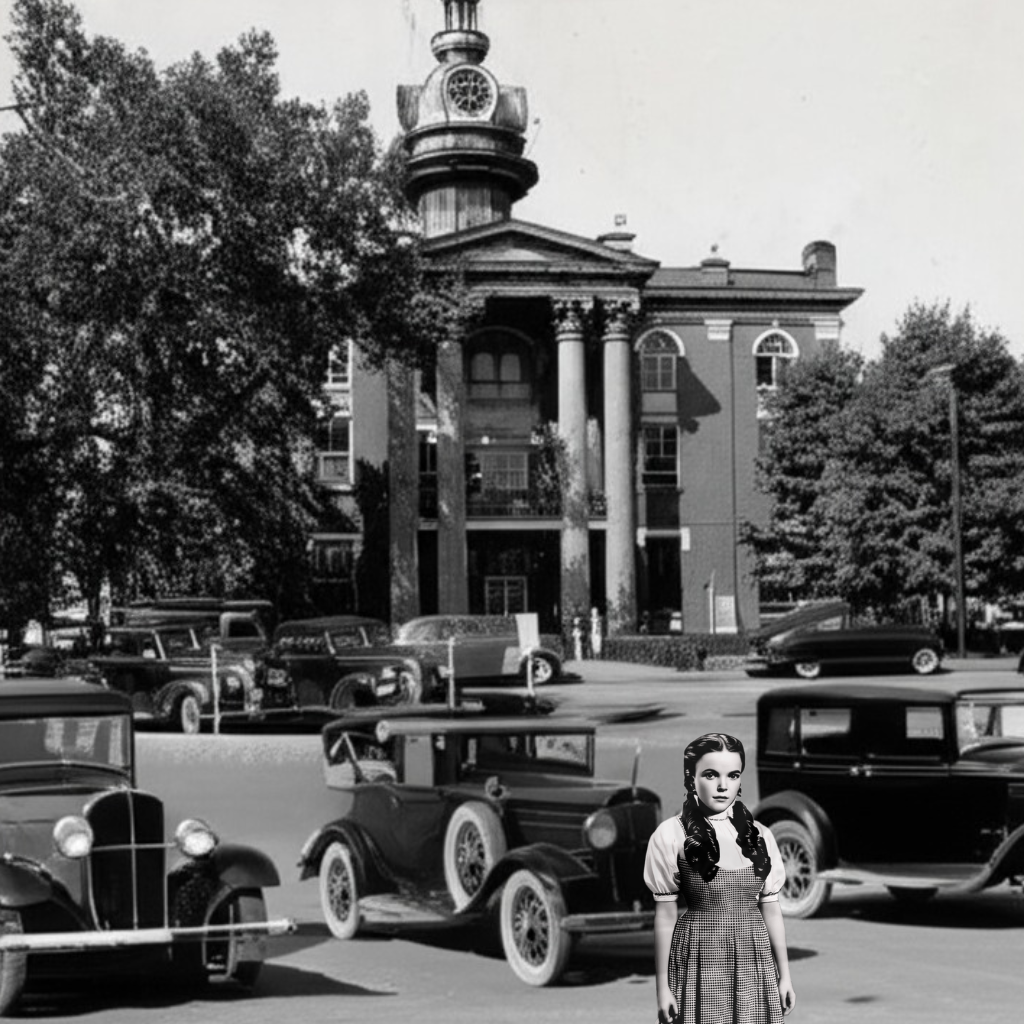
“Right there in the middle of the square, no shame at all. Folks would gather ‘round, clapping, and she’d curtsy like a proper little lady.” Whether belting hymns at the First Methodist Church or mimicking Ethel’s vaudeville numbers, Frances turned the square into her rehearsal space. Years later, Judy Garland would credit these informal performances with curing her stage fright: “If you can sing for a bunch of tough old farmers, you can sing for anyone.”
From “Baby Gumm” to Judy Garland: The Murfreesboro Influence
While the Gumm family’s time in Murfreesboro was fleeting—overshadowed by their eventual move to California in 1926—those summers left an indelible mark. The close-knit community, the music-filled nights, and even the square’s cacophony of sounds seeped into Frances’s artistic DNA.
In Murfreesboro, she learned to project her voice over the din of wagons and chatter, a skill that later made her a powerhouse performer. She absorbed the storytelling traditions of the South, where every neighbor had a tale taller than the last—a knack that fueled her emotional depth on screen.
Even her resilience, honed by navigating the pressures of her ambitious mother Ethel, had roots in the gentle stubbornness of her Tennessee kin. By 1935, when MGM rebranded her as “Judy Garland,” the little girl from Murfreesboro was ready. But traces of her Tennessee summers lingered: in her warmth with audiences, her humility, and that twang-tinged vibrato that made “Have Yourself a Merry Little Christmas” feel like a hug.
Legacy in the Shadow of the Courthouse
Today, Murfreesboro wears its Judy Garland connection quietly. The Gumm family homes on Manchester Pike and East Main Street are long gone, replaced by modern developments.
Yet the courthouse square remains, its bricks echoing with the ghost of a pigtailed girl’s laughter. I’m reminded of a Halloween not too long ago, during our town’s beloved “Trick or Treat on the Square” celebration. Every business on the historic public square took part, inviting children from across the community to enjoy a safe and festive evening filled with candy, creativity, and costumes galore.
As I refilled a bucket of candy by the counter at Veda’s Flowers & Gifts, I glanced out our big storefront window. Across the street stood the iconic courthouse, a timeless landmark watching over the lively crowd. The sidewalk out front was packed with little ghosts, superheroes, and princesses—all eagerly making their rounds with bags, sacks, and pails wide open in hopes of something sweet.
That’s when I saw her. A little girl, maybe seven or eight, with pigtails bouncing and a blue-and-white gingham dress that sparkled with nostalgia. But it was the ruby red slippers that truly caught my eye. In that moment, I smiled. The spirit of Francis Gumm—better known as Judy Garland—was alive and well on the square that night.
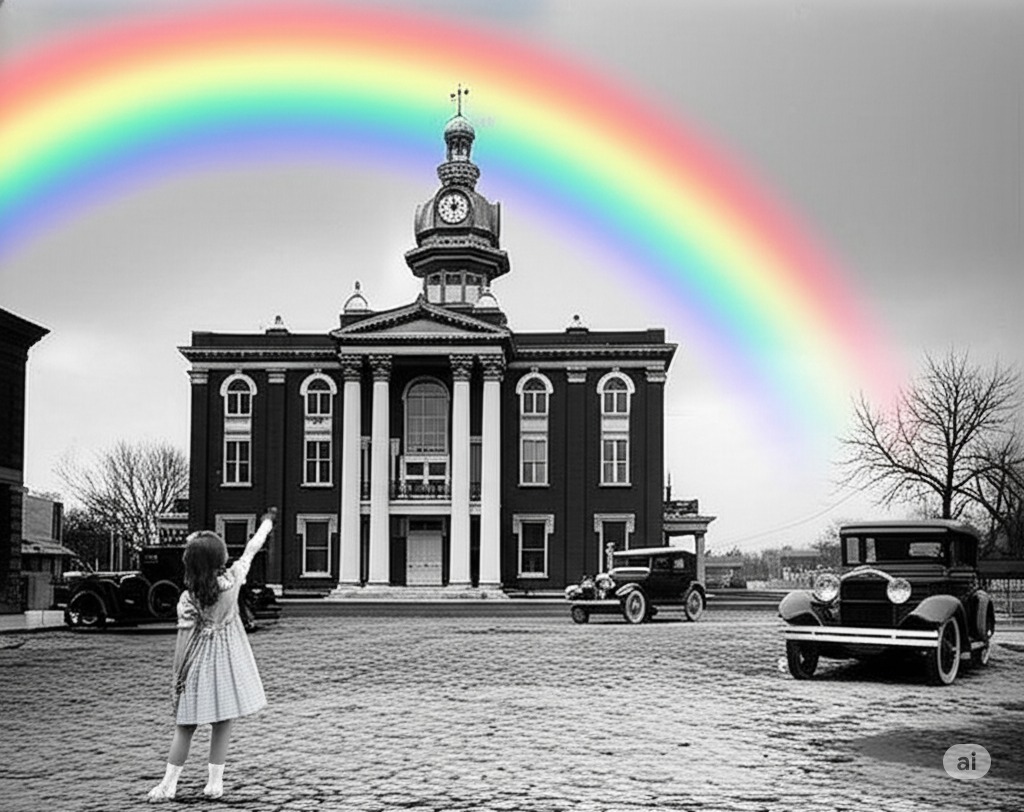
In 2022, local historians petitioned for a plaque near the square to honor Judy’s ties to the town—a gesture that split residents. (“She wasn’t here that long,” grumbled one council member.) But for those who care to look, the clues endure: in the way sunlight dapples the square at dusk, in the hum of a summer night, and in the uncanny resemblance between Judy’s wistful grin and a certain photo in the Rutherford County Archives—a toddler in a lace dress, mid-curtsy, on the courthouse steps.
So, the next time you watch The Wizard of Oz, listen closely. When Judy Garland closes her eyes and dreams of somewhere over the rainbow, remember: part of that rainbow began in Murfreesboro, Tennessee, where a starlet named Frances once turned a sleepy Southern square into her very first spotlight.